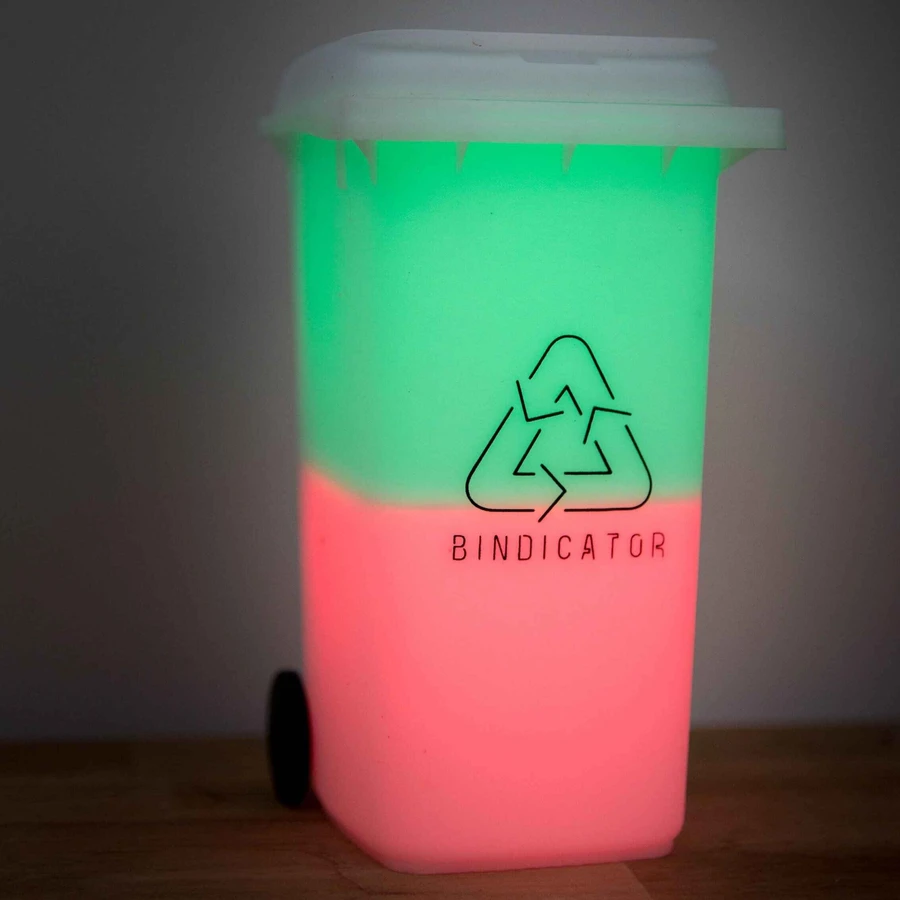
You'd think putting the bins out would be one of the simplest jobs in the house. And yet, somehow, it requires knowing what day of the week it is, which week of the fortnight you're in, what colour bin matches what waste type, whether the council changed the schedule for a public holiday three weeks ago that's still throwing things off, and whether your neighbour across the road is on the same rotation as you (they're probably not).
If you've ever found yourself Googling "which bin goes out this week" at 9pm on a Sunday night, you're part of a very large, very frustrated club. It's not you. The system genuinely is confusing. But there are actual reasons it works this way — and once you understand them, the whole thing makes slightly more sense. Slightly.
Why Don't They Just Collect Every Bin Every Week?
The short answer is money. The longer answer is money, trucks, routes, landfill costs, and environmental targets.
Running a bin collection service is extraordinarily expensive. A single garbage truck costs upwards of $400,000, each crew needs several workers, and diesel isn't cheap. When councils audit their services, they consistently find that most recycling and green waste bins are less than half full when collected weekly. Research from councils like Kiama in NSW found that over 66% of yellow-lid recycling bins were only half full on collection day, and more than a third of households weren't even putting them out every week.
Collecting half-empty bins is a waste of fuel, time, and ratepayer money. Fortnightly collection cuts the cost of those runs roughly in half while still providing enough capacity for most households. The savings are significant: councils across Australia report that fortnightly general waste with weekly organics costs around $36 per household per year less than collecting everything weekly.
"Picking up empty bins — or driving past homes with no bins out — wastes fuel, time and money. A simple change in frequency allows us to modernise our service while reducing unnecessary costs."
There's also an environmental calculation. Councils across Australia and the UK are under pressure to divert waste from landfill. The strategy that's emerged is to make organics collection weekly (because food waste rots and smells) while pushing general waste and recycling to fortnightly. The theory is that if your general waste bin is only collected every two weeks, you'll think harder about what goes in it and recycle more. Councils that have made this switch report organic waste diversion increases of 30–45%.
It works on paper. But it also means you now need to track which week is which — and that's where the confusion begins.
Why Is My Neighbour on a Different Schedule to Me?
This catches people off guard, especially when they move house. You can live on one side of a street and be on Week A, while the house across the road is on Week B. It feels arbitrary. It isn't.
Councils divide their area into collection zones. Each zone is assigned to a specific truck on a specific day, and the zones are designed to balance the workload evenly across the week. If every household in a large council area was collected on the same day, you'd need an enormous fleet of trucks on Monday and nothing to do on Friday.
Instead, councils stagger their routes. Zone 1 gets general waste on Week A and recycling on Week B. Zone 2 gets the opposite. This means half the recycling trucks are out one week and half the next, spreading the load on processing facilities and keeping the fleet running efficiently.
The downside is that "which bin goes out this week" doesn't have a single answer, even within the same suburb. Your collection day and your bin rotation depend on your specific zone, which is determined by your address. This is why you can't just ask a friend across town — there's a good chance they're on a completely different cycle.
And Then There's the Colour Problem
As if the schedule wasn't confusing enough, bin colours aren't standardised.
In most of Australia, the general pattern is: red lid for general waste, yellow for recycling, and green for garden/organic waste. But this isn't universal. Some councils use dark green lids for general waste and lime green for organics. Others use blue for recycling. A few have introduced purple lids for glass or maroon for food-only organics.
In the UK, it's even more chaotic. There is no national standard. A black bin in one council is general waste; in another, it's recycling. Green can mean garden waste or general waste depending on where you live. Some areas use blue for recycling, others for paper only. Brown might be garden waste, food waste, or both. And if you've moved from one council area to another, whatever colour associations you'd built up in the last few years are now actively working against you.
This means you can't rely on instinct. Every time you move — or even when your council reorganises its service — you have to relearn the system from scratch.
The Public Holiday Chaos
If alternating weeks create confusion, public holidays turn it into full-blown chaos.
When a public holiday falls on a weekday, most councils push collections back by one day for the rest of that week. If your bins are normally collected on Tuesday and there's a Monday holiday, your collection moves to Wednesday. If your bins are normally collected on Friday, you might be pushed to Saturday — or skipped entirely until the following week.
The problem is that this shift doesn't just affect one week. It can throw off the entire alternating cycle for weeks afterwards. Did the council shift the fortnightly rotation, or just the day within the same rotation? Did they skip a week entirely? The answer varies by council, and many councils aren't great at communicating the change clearly.
Easter is the worst offender, with Good Friday and Easter Monday creating a double disruption in the same week. Christmas is similarly chaotic, with some UK councils pushing everything back for two consecutive weeks. And in Australia, when a state public holiday falls in a different week from a national one, you can get back-to-back disruptions that leave people genuinely lost.
Even councils that publish updated calendars often bury them three clicks deep on their website, behind a postcode lookup that may or may not work on mobile.
"The real confusion isn't the schedule itself — it's that the schedule keeps changing, and the information about those changes is scattered across council websites, social media posts, and the occasional leaflet that arrived two weeks late."
How to Find Your Actual Schedule
Despite all of this, the information is out there. Every council publishes collection schedules — it's just not always easy to find. Here are the quickest ways to check:
Australia — Council Lookup Tools
- City of Sydney — cityofsydney.nsw.gov.au/waste-recycling
- City of Melbourne — melbourne.vic.gov.au/waste
- Brisbane City Council — brisbane.qld.gov.au/clean-and-green/rubbish-tips-and-bins
- Any Council — Search "[your council name] bin collection day" and enter your address
United Kingdom — Council Lookup Tools
- Find your council (GOV.UK) — gov.uk/find-local-council
- BinsOut (free reminders) — binsout.uk
- Any Council — Search "[your council name] bin collection" and enter your postcode
Most council websites let you enter your address or postcode to see a personalised schedule. Some even offer email or SMS reminders. The quality varies enormously — some are excellent, others look like they were built in 2007 and haven't been updated since.
The Deeper Problem: Notifications Only Reach One Person
Even if you find the perfect council app or set the perfect phone reminder, there's a fundamental issue that no calendar or notification can fix: it only reaches the person who set it up.
In a house with two, three, or four adults, one person becomes the unofficial Bin Manager. They're the one who checked the schedule, set the reminder, and now has to tell everyone else — or, more realistically, just does it themselves because explaining the fortnightly rotation to a housemate for the fourth time isn't worth the effort.
This is the gap that digital reminders can't bridge. A calendar event doesn't light up the hallway. An SMS doesn't signal to your partner that the bins have already been taken out. The information is siloed on one person's phone, invisible to everyone else in the house.
Because honestly, the schedule isn't going to get simpler. Councils have good reasons for making it complicated. But that doesn't mean you have to be the one keeping track of it all.